
Daylight saving NSW: the clocks changed, the sun didn't
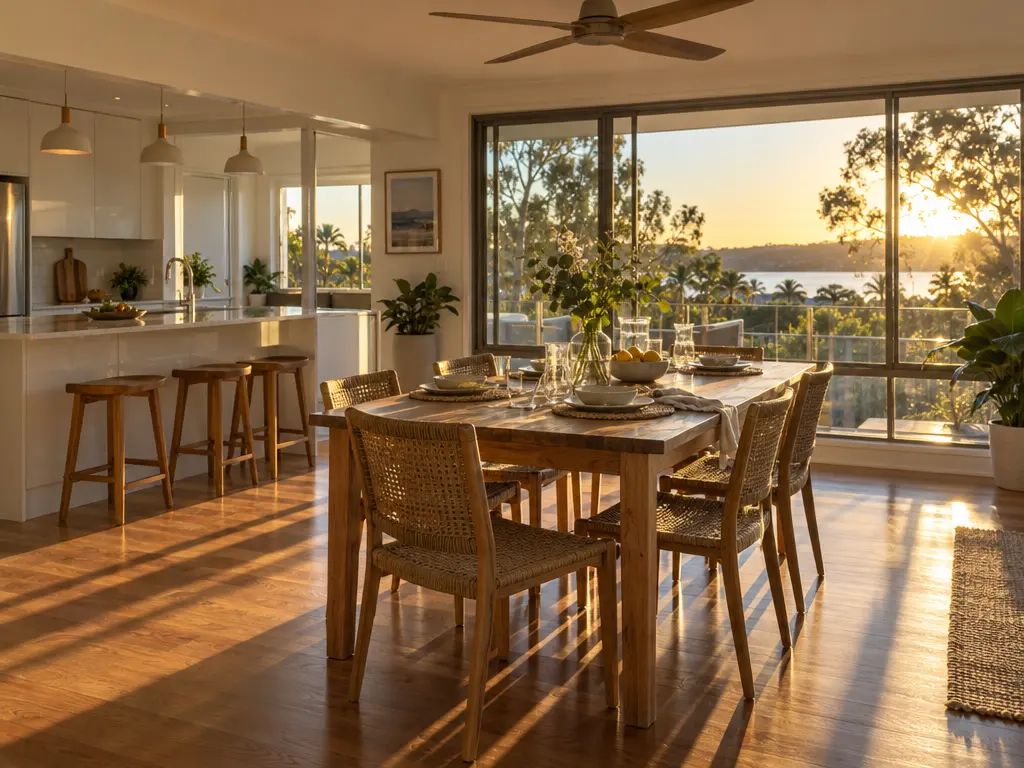
Same sun, same window: the clock reads one hour later
Source: NSW Government, Bureau of Meteorology
Daylight saving began at 2am on Sunday 4 October, when clocks went forward to 3am. The NSW Government says the point is more daylight in the evening and less artificial lighting at night.
Daylight saving adds no daylight at all: the sun follows the same path and only the clock moves, and day length comes from the season, as the Bureau of Meteorology's guide to the seasons explains.
That one-hour shift is the whole story for your windows. The low afternoon sun that slants straight through west glass now arrives later on the clock, when more of the household is home and using those rooms. The Australian Government's Your Home guide says this low-angle sun on east and west walls is more difficult to shade than the high summer sun on the north.
East rooms aren't off the hook either. Your Home says east-facing glass heats up through a cumulative process that causes discomfort in the afternoon and early evening.
If you want the exact sunset time at your own address, the BOM notes that sunrise and sunset times for any location and date are on the Geoscience Australia website. For why west glass needs a different plan to north glass, our west-facing room heat guide covers the sun angles, and the east and south light guide covers the other side of the house.
When does daylight saving end in NSW?
Source: NSW Government, Bureau of Meteorology
Daylight saving ends at 3am AEDT on Sunday 4 April 2027, when clocks go back to 2am. That's about six months of later evening sun, and it covers the whole of summer.
The BOM puts Australia's meteorological summer from December to February, with the summer solstice around 21 December. So the hottest stretch of the year falls entirely inside the daylight saving season. Whatever you set up for your west windows now, you'll be using every evening until April.
Why this summer's evenings could run hot
"most of the country is very likely to have unusually warm nights"
The Bureau's long-range forecast for October to December 2026, as republished by Mirage News, says days and nights are likely to be above average for almost all of Australia. It flags an "increased chance of unusually warm days" across the southern two-thirds and "an increased risk of heatwaves".
Nights matter here too. The same release says "most of the country is very likely to have unusually warm nights". It also says El Niño is expected to strengthen and likely peak in late spring or summer, and that September 2026 was Australia's second-warmest September on record.
Cessnock has already had a taste. Cessnock Airport recorded a 32.5°C maximum on Friday 2 October and 0.4 mm of rain over the first six days of the month. A forecast is not a promise, but it's a fair reason to sort out the hot rooms early.
A daily routine for west and east windows this summer
The routine is about timing: keep the heat out while the sun is on the glass, and let the house breathe when the air outside is cooler than inside.
- Early morning, open up. CSIRO's housing data site notes the coolest part of the day is usually 4am to 7am.
- Before the heat builds, close up. NSW Climate and Energy Action says to close doors, windows, blinds and curtains during the day, and to use shades during the hottest parts of sunny days. Start with west and east glass.
- Late afternoon and night, open again once it cools. Cool breezes often arrive in the late afternoon or early evening, and the NSW advice is to open windows at night.
- Move the cooking. The same NSW page suggests you cook outside or in the evening.
Fan first, then the aircon
| Fan | costs very little to run | makes a room feel about 3°C cooler |
|---|---|---|
| Air conditioner | set it between 23 and 26°C | each degree higher saves about 10% on the aircon bill |
Source: NSW Climate and Energy Action
When you need more than shade, reach for the fan first. NSW Climate and Energy Action says a fan costs very little to run and can make a room feel about 3°C cooler. If the aircon goes on, the same page suggests setting it between 23 and 26°C, with each degree higher saving about 10% on the aircon bill.
Come winter, flip the habit: keep shades open to get free solar heat. Our north-facing windows guide covers that side of the year.
Bedrooms: light at bedtime and hot west rooms
The clock change hits sleep before it hits the power bill. The Sleep Health Foundation says moving the clocks forward can increase the risk of sleep loss and drowsiness, and it can take up to a week to feel normal after the October change.
Children can take longer, because "for younger children it can still be light when they go to bed". The Foundation's tips run the other way in the morning: a bright bedroom on waking, and time outside early in the day.
West bedrooms carry a double load: light at bedtime and heat that has soaked in all afternoon. Your Home's advice on orientation is blunt: "avoid west-facing bedrooms as they can become too hot, making sleeping difficult". You can't turn the house around. Your Home does say external shading can be added later to an existing home, though.
A west bedroom in early evening, shutter blades tilted closed
Our view at Cessnock Shutters is that a kid's west bedroom is worth sorting first. Close the shading in the early afternoon, before the room heats, rather than at bedtime, when the heat is already in the walls. In the morning, open it fully for the bright room the Sleep Health Foundation recommends.
Outside the glass or inside it: why it matters
Source: NSW Climate and Energy Action, Your Home
Where the shade sits decides how much heat gets in. NSW Climate and Energy Action says external shading such as shutters and awnings blocks the sun's energy before it passes through the glass, stopping the greenhouse effect on your windows. Shading inside the glass, such as a curtain or an interior shutter, works at the glass line, so some heat is already in. Tilted up, shutter blades still throw much of the light at the ceiling, and for most rooms that is the difference between usable and not. For the harshest west walls, outside the glass wins, which is why we fit exterior aluminium where a west verandah needs it.
Shading pays off. Your Home says effective shading can block up to 90% of the heat from direct sun, and CSIRO's housing data site puts external window shading at up to 90% of unwanted heat gain, listing adjustable shutters among the options.
For the low sun on east and west walls specifically, Your Home says "adjustable vertical shading, such as external blinds, is the optimum solution for these elevations". The key word is adjustable: you want shade you can close in the afternoon and open again once the heat has gone.
Shutters, awnings, screens or blinds: how the NSW Government sorts them
| Option | Installation | Worth knowing |
|---|---|---|
| Shutters | "should be professionally installed" | listed by NSW Government as external shading |
| Retractable awnings | "should be professionally installed" | retract during storms or high winds |
| Solar screens | can often be DIY | a lighter option |
| External blinds | none stated | Your Home calls adjustable vertical shading such as external blinds "the optimum solution" for east and west elevations |
| Government rebate: none currently (NSW page updated 15 Dec 2025) | ||
NSW Climate and Energy Action says external shading suits homes with west-facing windows getting intense direct sun, and homes that want to cut glare and UV fading of furniture and floors. Its page sets out a few practical rules:
- Installation. Larger or heavier items such as shutters and retractable awnings "should be professionally installed". Solar screens can often be DIY.
- Weather. Retract awnings during storms or high winds.
- Cost. The page says the cost swings widely with the product and the size of the opening, from a DIY solar screen at the low end to a large motorised awning at the top. What your own windows cost comes from the free measure, not a range on a web page.
- Rebates. As of the page's December 2025 update, there is currently no NSW or Australian Government incentive or rebate for external shading.
If shutters are on your list, the shutter range shows the styles side by side.
This season at a glance
- Daylight saving: Sun 4 Oct 2026 to Sun 4 Apr 2027NSW Government
- Effective shading can block up to 90% of the heat from direct sunYour Home
- Fan: costs very little to run, about 3°C cooler feelNSW Climate and Energy Action
- Aircon: 23 to 26°C, each degree higher saves about 10%NSW Climate and Energy Action
- Rebate for external shading: none currentlyNSW Climate and Energy Action
Source: NSW Government, Your Home, NSW Climate and Energy Action
Your next step with Cessnock Shutters
Start with a five-minute walk around the house in the early evening this week. Note which windows have sun on them, which rooms feel hot, and which bedroom is still bright at bedtime. Those are your priority windows for the season.
Then work out what each one faces with the Shutter Aspect Planner. When you're ready to talk through the west and east windows on your list, book a measure and quote with Cessnock Shutters and we'll look at them with you. The evening sun isn't going anywhere until April.