
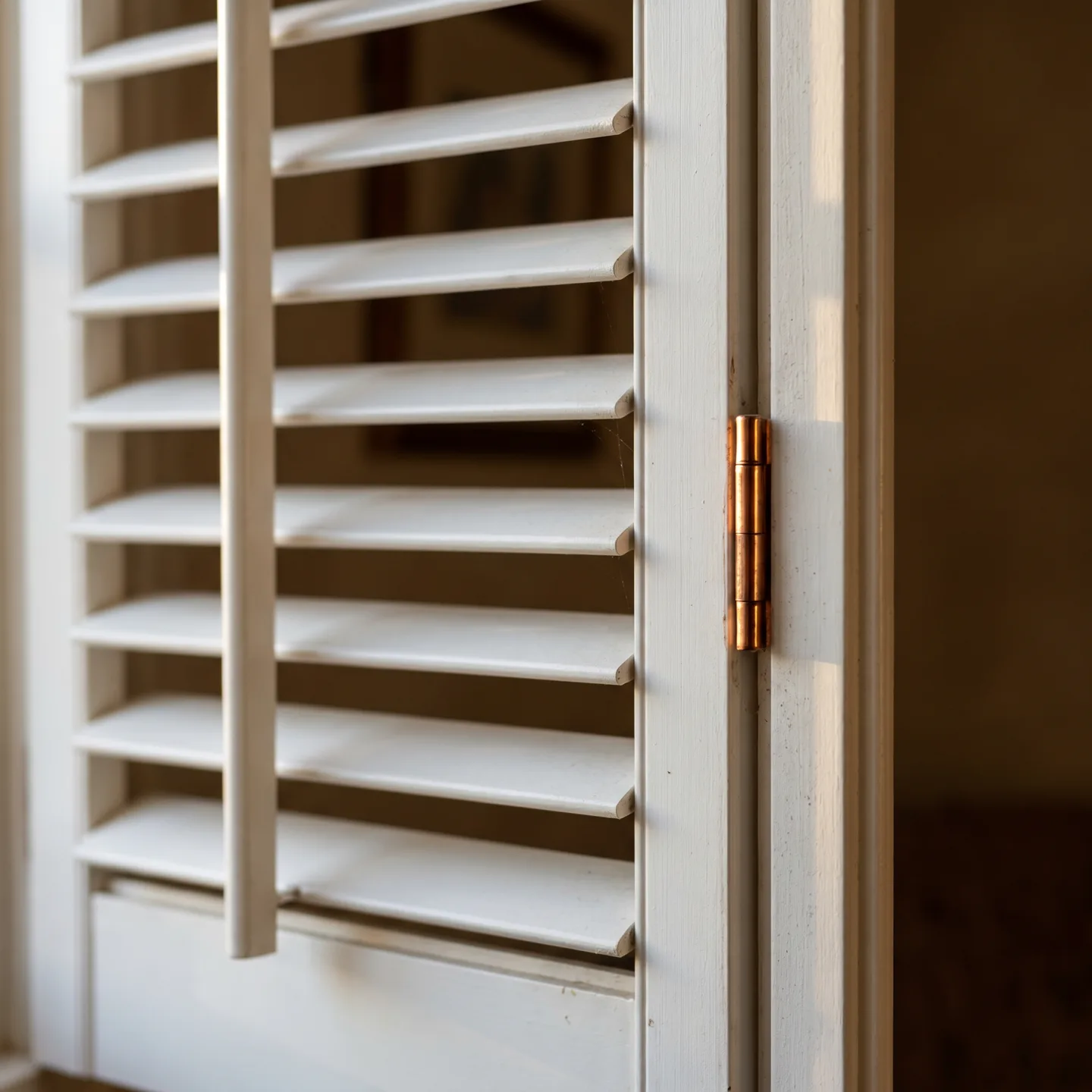
What front tilt actually is
A slim vertical rod fixed to the face of the louvres. Move it and every blade in the panel moves together. It is the original plantation shutter mechanism, and on the right window it is still the best one: honest, visible, easy to use with one hand, and easy on the eye in a room with picture rails and skirting boards that were milled last century.
Panels hinge from a frame we build to your window, Z-frame or L-frame depending on the reveal, so they swing open like little doors when you want the whole window back. That matters on sash windows you still open for the cross-breeze.
Built for the windows this town already has
Cessnock's older streets, and Aberdare, Bellbird, Kearsley and the villages between, are rows of separate houses from the mining decades, most with their original double-hung sashes. Three jobs come up on those windows again and again, and the front-tilt timber shutter answers all three:
- The west wall in summer. Blades tilted up throw the low afternoon sun at the ceiling. The room keeps its daylight and loses the heat load. On a valley-floor summer day that runs to 28 degrees and over, the difference by bedtime is real.
- The street-close frontage. Older cottages sit near the footpath. Blades angled up let light bounce in off the ceiling while cutting the sight-line from outside. Privacy without drawn curtains at two in the afternoon.
- Suiting the house. A painted timber shutter reads as joinery, not window furniture. It sits right beside timber sashes and weatherboard in a way an aluminium venetian never will.
The rod is a handle, not a decoration. One movement sets the whole window against the hour that troubles it.
Timber, honestly
Our painted timber panels are basswood, the joinery standard for shutters: light enough not to strain hinges on wide panels, stable enough to hold paint and shape through dry Hunter summers. Timber belongs in dry rooms. For a bathroom or laundry we will steer you to waterproof PVC without being asked, because a painted timber blade over a steaming bath is a repaint waiting to happen.
Blade width on cottage windows
Double-hung sashes are usually modest panes, and 63 or 89 mm blades sit in proportion with them. If you are weighing the choice, the blade width guide walks through it pane by pane. If you would rather just see it, we bring sample panels to the measure.
Questions we hear about front-tilt timber
Will they suit a renovated cottage, or only original ones?
Both. A fresh renovation with sash windows keeps the same proportions the shutter was designed around. Colour-matching the paint to your trim is part of the job.
Can I still open the window behind them?
Yes. Panels hinge open, and we set hinge sides and panel splits around how you actually use each window, which is exactly the kind of thing the in-home measure is for.
Front tilt or hidden tilt on an older house?
Usually front tilt, but it is taste, not law. The honest cases for each are in the tilt guide.
Which way does yours face?
Tell us the rooms that struggle, and when they struggle. We'll come out, stand in each one at the window, measure properly, and quote the shutters that suit the light your house actually gets. The measure and the quote cost nothing.