
BOM's summer outlook raises the odds of both halves of a heatwave at once. For November to January, it gives eastern parts of NSW over a 70% chance of unusually high maximum temperatures. It gives much of the country a very high chance (over 80%) of unusually high minimum temperatures, "more than 4 times the normal likelihood". The NSW Government counts a heatwave as 3 or more days when both maximum and minimum temperatures are unusually high for a location.
Set those side by side and the outlook pushes hot days and warm nights in the same direction. That is our reading across the two sources. It is not a forecast of any particular heatwave in Cessnock.
Warm nights are what turn this into a house problem. When walls, floors and furniture soak up sun all day, a mild night has less chance to draw that heat back out. So the useful work happens in daylight. Stop the sun reaching your glass, above all on the east, the west and the roof. At Cessnock Shutters, that is where we'd start, and the rest of this page shows how.
What do BOM's El Niño and summer outlooks say?
Chances for November to January
- Daytime temperatures above average, most of Australiaover 80%
- Unusually high maximum temperatures, eastern parts of NSW and Victoriaover 70%
- Unusually high minimum (overnight) temperatures, much of Australiaover 80%more than 4 times the normal likelihood
BOM outlook issued 22 October 2026. Each bar is a lower bound: the chance is over the mark, so the bar runs on.
BOM's statement issued 27 October 2026 is headed "Strong El Niño continues". The weekly relative Niño3.4 index reached +2.88 °C for the week ending 25 October, the highest in the Bureau's weekly dataset, which goes back to 2008. The 30-day SOI to 25 October was −16.6, against an El Niño threshold of −7. All models forecast the peak around November to December, staying above El Niño thresholds into autumn 2027.
The outlook issued 22 October says November to January daytime temperatures are "very likely" above average (over 80% chance) across most of Australia. It also notes September 2026 was the warmest September on record. For NSW, an El Niño pattern means summer heatwaves "may become more frequent, hotter and last longer".
Two things are easy to overread. A strong El Niño signal does not necessarily mean strong impacts on Australian rainfall and temperature, so the long-range forecast is the better guide to what your area will get. El Niño also doesn't simply mean a rainless summer: 2026 is shaping up as Australia's wettest El Niño year on record, even with drier-than-average conditions along much of the eastern seaboard, including the NSW coast, in the past three months. BOM's outlook even has rainfall likely above average across north-eastern NSW.
The heat signal is the firmer one. That is the one your house can prepare for.
Where does summer heat get into a house?
- 1Windows: up to 87% of a home's heat gainYour Home, glazing
- 2Unprotected glass: often the greatest source of heat entering a homeYour Home, shading
- 3Skylights and roof glazing: almost twice the heat of an unprotected west window of the same areaYour Home, shading
- 4East glass: starts a cumulative heat build-up felt in the afternoon and eveningYour Home, shading
Source: Your Home, glazing, Your Home, shading
Mostly through the glass. The Australian Government's Your Home guide says up to 87% of a home's heat gain is through windows. It also says unprotected glass is often the greatest source of heat entering a home.
Not all glass is equal. Skylights and roof glazing get almost twice the heat of an unprotected west window of the same area. East-facing glass starts a cumulative heat build-up that causes discomfort in the afternoon and evening. So the morning sun you barely notice at breakfast is still working against you at dinner time.
West glass takes the hardest afternoon sun. Our West Facing Room Heat guide covers those rooms. So does The clocks moved, the sun didn't, on daylight saving and hot west windows.
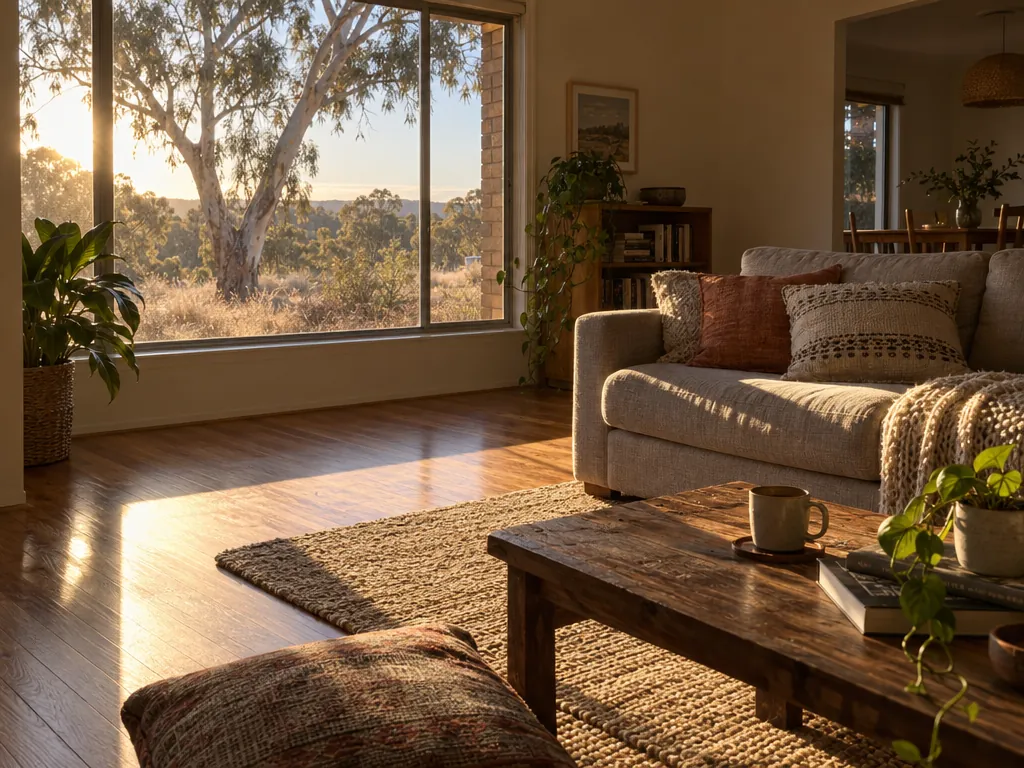
A quick audit is worth ten minutes. On the next sunny day, walk round the house morning and afternoon. Note every window, glass door and skylight the sun is hitting directly, and which way each one faces. Then take that list to our Shutter Aspect Planner.
How do you keep the heat out before it reaches the glass?
Shade outside the glass
Blocks the sun's energy before it passes through the glass, avoiding a greenhouse effectNSW Energy, external shading
Shade inside the glass
Window furnishings are especially useful added to existing windowsYour Home, glazing
Shading can block up to 90% of direct-sun heat: Your Home's figure, not a promised result
Source: NSW Energy, external shading, Your Home, glazing, Your Home, shading
Shade the outside first, where you can. NSW Energy says external shading such as shutters and awnings blocks the sun's energy before it passes through the glass, avoiding a greenhouse effect. It rates that approach as best for west-facing windows with intense sun. For east and west façades, Your Home calls adjustable vertical shading such as external blinds "the optimum solution". Low morning and afternoon sun comes in flat, under the eaves, which is why shading that hangs down in front of the glass suits those sides.
On the government's figures, shading can block up to 90% of the heat from direct sun. Treat that as the ceiling for well-designed shading, not a number to expect in every room.
The NSW Government's heat advice says the same thing in household terms. It suggests you use awnings, blinds, shutters or material like shade cloth to stop sun shining on windows. It also recommends reflective window coverings or pale-lined curtains, particularly on windows that face west, and sealing gaps around windows and doors.
Do plantation shutters block out heat?
Most plantation shutters are fitted inside the window, so the sun has already passed through the glass when it meets them. Closed or angled louvres still stop that sun landing on your floors, your furniture and you. Your Home notes window furnishings are especially useful added to existing windows. What inside shutters can't do is stop the pane itself from warming the way an outside shade does.
On a hard-working east or west window, our view is that outside shading and inside shutters work best together. One stops the sun before the glass. The other lets you set light and privacy from inside, through the whole day. If you're weighing up styles, our guides to front tilt or hidden tilt and blade widths cover the hardware.
Two cautions. First, shading and insulation work as a pair. Your Home warns that insulation without summer shading can create an "oven" effect that keeps heat in. Second, NSW Energy says larger, heavier items such as awnings or shutters "should be professionally installed". It also says there is currently no NSW or Australian Government incentive or rebate for external shading (checked October 2026).
If you fit external awnings, the same page says to retract awnings in storms or high winds. Hot weeks and storm weeks overlap in a Hunter summer, so that sits alongside our storm season notes.
When should you close and open shutters on a hot day?
By day: shaded where the sun strikes
- 1Morning: close or angle the louvres on east windows
- 2Middle of the day: shade skylights and roof glazing
- 3Afternoon: close the west side before the sun gets onto the glass
After dark: open
Source: NSW Energy, summer and winter tips, NSW Energy, hot weather, NSW Government, prepare your household, Your Home, shading
Follow the sun round the house. NSW Energy's summer advice is to close doors, windows, blinds and curtains during the day and open windows at night. It also says to use shades during the hottest part of sunny days. In practice the day looks like this:
- Morning: close or angle the louvres on east windows as the sun reaches them.
- Middle of the day: shade skylights and roof glazing, if they have a covering.
- Afternoon: close the west side before the sun gets onto the glass, not after the room is already hot.
- After dark: open up and let air through, but only the windows you can leave open safely. The NSW Government's advice is to plan cross-ventilation without compromising security.
With louvred shutters you don't have to choose between shade and a dark room. Tilt the blades to block the direct beam while letting some daylight bounce in, and close them fully only when the sun is right on the glass. Our guide to street privacy without dark rooms has more on balancing light and cover.
The routine flips in winter. NSW Energy says to keep shades open in winter to gain free heat. Our North Facing Windows Winter Sun guide picks up from there.
How should you run fans and air conditioning through the 3 pm to 8 pm peak?
Fans and air conditioning on a hot day
| What | NSW Energy figure | Note |
|---|---|---|
| Fan | cheap to run; makes the room feel about 3°C cooler | use first |
| Air conditioner, summer | 23 to 26°C; each degree higher saves about 10% on the air-conditioning bill | NSW Energy estimate |
| Hot-weather peak, 3 pm to 8 pm AEDT | fans first, air conditioner 24 to 26°C, cool only rooms in use | if you can't safely cut energy use, don't try |
Source: NSW Energy, summer and winter tips, NSW Energy, hot weather
Shading cuts how much cooling you need. On a hot afternoon it won't replace cooling altogether.
Start with fans. NSW Energy says they are cheap to run and can make the room feel about 3°C cooler. When you need the air conditioner, NSW Energy suggests you set it to 23 to 26°C, with every degree higher saving about 10% on the air-conditioning bill, on its estimate.
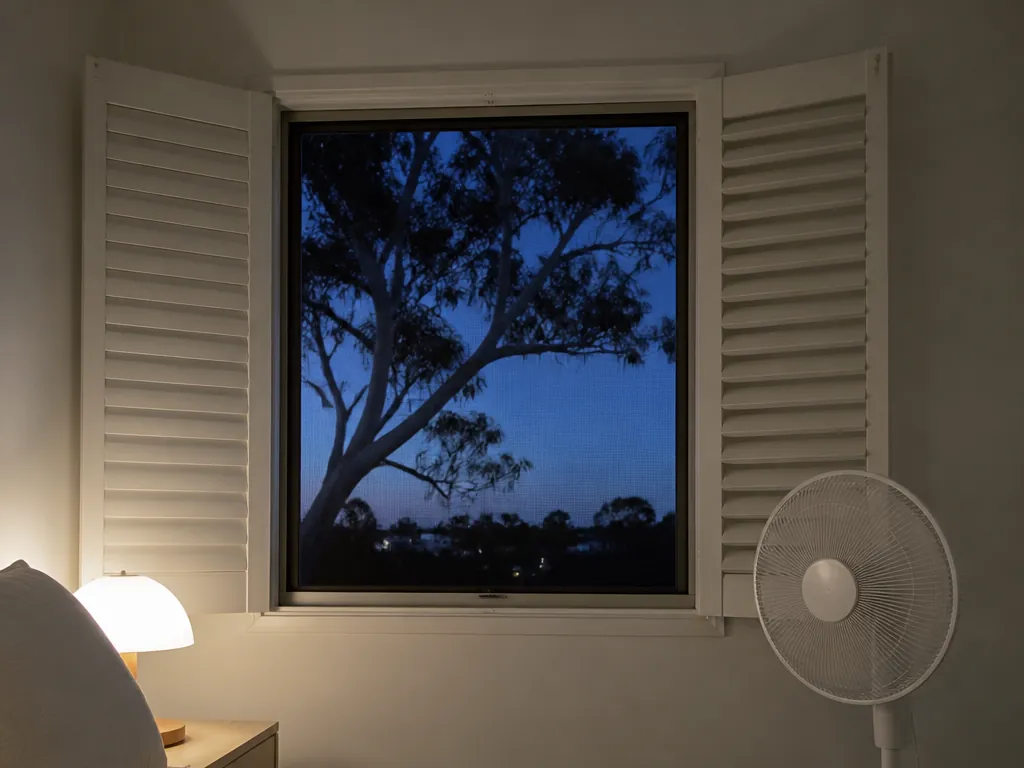
On hot days, grid demand is highest between 3 pm and 8 pm AEDT. For those hours NSW Energy suggests fans first, the air conditioner at 24 to 26°C, cooling only the rooms in use, and closing curtains or considering external shading where sun hits the window. It is also plain about the limit: if you can't safely cut energy use, don't try.
That peak lines up with the west sun. The afternoon sun on west glass arrives in the same hours the grid is under most strain. A west window shaded before it heats the room can mean less work for the air conditioner exactly when power is tightest.
What should you check around the house before summer?
Before the first hot week
Most of this comes from the NSW Government's heatwave preparation advice and NSW Energy. Tick it off now, before the first hot week.
- Stop the sun reaching windows that take it directly, using awnings, blinds, shutters or material like shade cloth, with outside shading first on east and west glass where you can.
- Use reflective window coverings or pale-lined curtains, particularly on windows that face west.
- Seal gaps around windows and doors.
- Check fridges, freezers, fans and air conditioners work.
- Keep a week's food, water and medicines.
- Have ice and a cooler box ready for a power outage.
- Plan cross-ventilation without compromising security.
- Close doors, windows, blinds and curtains during the day and open windows at night, where you can do it securely.
- During the 3 pm to 8 pm AEDT peak, use fans first and cool only the rooms in use, unless cutting back isn't safe for you.
- Make sure any external awnings retract easily, so you can retract them in storms or high winds.
What can't shading do when a heatwave arrives?
The summer numbers
- Over 70%: chance of unusually high November to January maximums, eastern parts of NSWBOM outlook
- Over 80%: chance of unusually high minimum (overnight) temperatures, much of AustraliaBOM outlook
- Heatwave: 3 or more days when both maximum and minimum temperatures are unusually highNSW Government
- Up to 87% of a home's heat gain is through windowsYour Home
- Shading can block up to 90% of direct-sun heat: source figure, not a promised resultYour Home
- Peak grid demand 3 pm to 8 pm AEDT: if you can't safely cut energy use, don't tryNSW Energy
Shading cuts the heat coming in. It does not replace insulation, a breeze at night or a cool room to retreat to when the heat runs for days. In a heatwave, people come before windows.
Heatwaves are graded low, severe or extreme. The Bureau of Meteorology provides heatwave warnings from November to the end of March, and NSW Health can issue a heat alert at any time if early-season heat is forecast. So watch for both, rather than waiting for the calendar.
Hot spells also dry the country out. AFAC's spring outlook flags heightened fire risk across northern and southeastern NSW. It also says "bushfires can still occur in regions with a normal seasonal outlook", so stay informed and follow fire and emergency services advice.
Your next step: sort the sunny windows before the first hot week
Make your list of the windows, glass doors and skylights the sun hits directly, with the direction each one faces. Put east, west and roof glass at the top, because that is where the heat builds.
If you'd like a hand working out what suits each window, talk to Cessnock Shutters through our Book a Free Measure & Quote page. If you'd rather look first, the plantation shutter range is there to browse.